
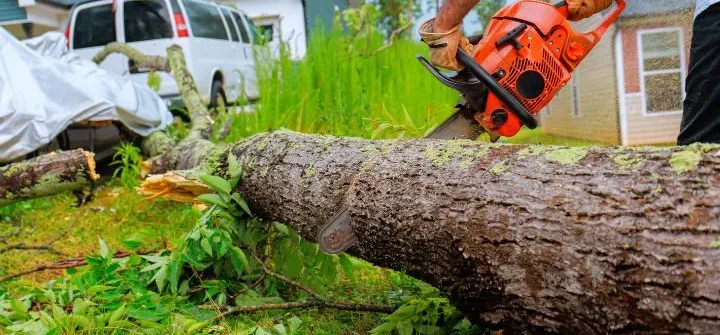
A professional tree removal is your safest option when dealing with a dead, decayed or dying tree that’s structurally unsound, storm-damaged, threatening structures and powerlines or lies in the way of approved construction work. Tree removal services are considered as a part of responsibility towards larger public safety, with due consideration towards sustainability. This week, Payless Tree Lopping experts help you understand the necessity.
When Tree Removal Makes Sense
Most trees never need to come down. A sensible prune every few years keeps them safe and tidy. However, sometimes, a tree reaches a point where cutting back branches only delays the problem. Spotting them early separates a planned job from an emergency call-out, and it is when professional tree removal starts to make sense.
-
The Tree Is Dead or Dying
A dead tree is a falling tree, with the risks unknown.
Dry wood loses strength and flex, so limbs tend to drop even in light wind. At Payless Tree Lopping, we always encourage spotting the trouble early.
We suggest keeping an eye out for bare branches when neighbouring trees are green, bark peeling in sheets, snap-dry twigs, and a crown that thins a little more each season.
Check the paperwork too. In Sydney, most councils ask for an arborist report before accepting that a tree is dead, dying or dangerous.
-
Structural Defects That Pruning Cannot Fix
Pruning suits many trees, however, a trained eye checks for heavy lean, bark trapped between stems, dead branches, decay, hollows and fungal fruiting bodies.
A trunk forking at a tight angle is the classic case. The squeezed bark holds nothing together, so the union can split in a storm. Over a roof, play area or driveway, removal is usually the safer call.
One may be manageable, where pruning services can be considered whenever they will do the job. Two or three together rarely are.
-
Storm Damage and a Shifting Root Plate
After heavy rain and wind, look at the ground before the canopy. Lifted or cracked soil on one side, lean or snapped roots near the base mean the anchor has failed, even if the tree still stands.
This is where, when we receive a call for tree removal services, the initial advice from us includes keeping people, cars and pets away. It is because a storm-struck timber is often under tension, and a loose-looking limb can spring when cut.
At Payless Tree, we assess on site before cutting, and emergency calls are attended to on priority.
-
Disease or Decay Working Through the Trunk and Roots
Decay fungi work from the inside. A bracket or cluster of mushrooms at the base usually means the fungus has been feeding for years, hollowing out strength you cannot see. Dieback creeping from the tips toward the trunk points the same way.
Once decay reaches the trunk or main roots, the tree loses both its grip and its ability to feed itself, and soft timber near a house is an easy target for white ants.
Experience-based tree removal services in Sydney always consider a proper look at the cause, because removal is a last step, never a first one.
-
Roots and Limbs Threatening Buildings, Drains and Powerlines
Position matters as much as health. A sound tree can still need to go when roots lift paving, crack slabs and push into drains, or when limbs keep loading the roof and gutters.
Here, powerlines can raise the stakes for you. Ausgrid says owners must keep private overhead lines clear of vegetation, and any trimming within three metres of its powerlines must be done by workers accredited under the SafeWork Code of Practice for Work Near Overhead Powerlines.
If a branch touches a line, stay back and call Ausgrid’s emergency number, 13 13 88. And when considering a professional tree removal contractor, ask about handling clearances near lines.
-
The Wrong Tree in the Wrong Place
Some trees never suited their spot. A species that matures well over ten metres, planted a couple of metres from a house, becomes a recurring bill and a slow hazard.
Ausgrid suggests planting at least five metres from powerlines, or a distance equal to mature height, and the same thinking applies to buildings, pools and boundaries. Replacing it with something better sized is a sensible reset, and we are happy to talk through species that suit the space.
-
Building Work and Approved Development
Lastly, a reputed contractor follows the Safe Work Australia guide to managing the risks of tree work.
Extensions, pools, driveways and granny flats need room, and sometimes a tree comes under it. Where removal is part of a development consent, the approval spells out what can come down.
It is wise to plan for the stump at the same time. Left in the ground, it rots, invites white ants and termites, and blocks new paving or slabs. Booking tree removal and stump grinding leaves a clear, level area to build on.
Before You Book Tree Work
Searching “tree removal service Sydney” gives you plenty of names. Pick the one that inspects on site before quoting, explains why removal is needed and says plainly when it is not.
If there’s a tree that needs a risk assessment, insurance-backed management and safe removal execution, Payless Tree Lopping offers professional tree removal expertise. For over 15 years, we’ve secured homes and businesses with our responsible services.
If you’d like a free quote, send us the photos and details or call 0455 434 465.
FAQs
1. How do I know if a tree on my property needs removing?
Look for dead branches, a growing lean, fungal growth at the base, trunk cracks or lifted soil around the roots. Any of these deserves a professional assessment before you decide.
2. Do I need council approval to remove a tree in Sydney?
Often yes. Rules vary by council and zoning, and some trees are protected by size or species. Check with your council first, because illegal clearing can quickly attract significant fines.
3. What are the risks of removing a tree without professional help?
We advise against it. Felling involves heights, falling timber, tensioned limbs and nearby powerlines. Trained, insured crews with proper equipment manage those risks far more safely than a weekend attempt.
4. Is stump grinding necessary after tree removal?
Usually, yes. A leftover stump can rot, attract white ants and termites, become a trip hazard and block paving or planting. Some species also resprout, so grinding saves trouble later.
5. When should I consider professional tree removal and how long does it take?
Many residential removals take a few hours to a day, though large trees, tight access or powerline clearances can extend that. We confirm the timeframe when we inspect and quote.
6. Who is responsible for trees near powerlines on my property?
Owners must keep private overhead lines clear of vegetation. Work within three metres of Ausgrid powerlines needs workers accredited under the SafeWork Code of Practice for Work Near Overhead Powerlines.
7. How do I find a tree removal service Sydney homeowners trust?
Ask for proof of insurance, check qualifications and experience, and expect an on-site inspection before the quote. Clear explanations and a free, no-obligation quote suggest someone who respects your time.
8. Why should tree removal be handled by professionals?
Yes. At Payless Tree Lopping, we handle small residential yards and larger commercial sites across the North Shore, Northern Beaches, Hills District, Inner West, Eastern Suburbs and Sutherland Shire.

